
While most drivers focus on avoiding fender-benders, some of the most frequent and costly claims for organizations happen when the vehicle isn’t even in motion. In insurance terms, these are called “Other Than Collision” (OTC) or Comprehensive claims. For churches, schools, and nonprofits, these incidents can disrupt transportation schedules and strain budgets. Understanding these common “non-accidents” is the first step toward preventing them, soo here are the five most common ‘Other Than Collision’ claims for fleets and how to mitigate their impact.
1. Animals
Animal collisions, particularly with deer, are among the most frequent OTC claims. According to industry data, the risk of hitting an animal is nearly three times higher during the “mating and hunting” months of October through December. Often exceeding $5,000, the average cost of a deer strike claim has risen significantly, because modern vehicles house expensive safety sensors and high-tech headlights in the front bumper and grille. How do you help prevent this? Train drivers to never swerve for an animal. Swerving often leads to a much more dangerous (and more expensive) collision with a tree, a pole, or another vehicle. It is generally safer to brake firmly and stay in your lane.
2. Hail and Extreme Weather Damage
Unlike another car in an accident, you can’t sue a storm. Hail damage can happen in minutes and affect your entire fleet simultaneously if they are parked in an open lot. Hail can result in thousands of tiny dents across the hood, roof, and trunk, often totaling the vehicle if the cost of “paintless dent repair” exceeds the car’s value. So if a severe storm is forecasted, consider moving your fleet under a canopy, into a garage, or even close to the leeward side of a large building to provide a windbreak.
3. Glass Breakage
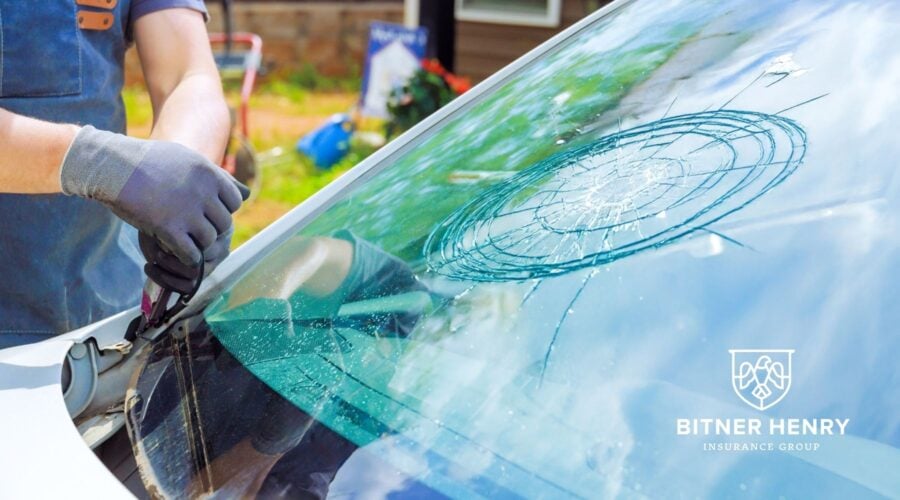
Rocks kicked up by construction trucks or thermal stress from extreme temperature changes can cause windshields to chip or crack. This is probably the most frequently filed OTC claim! While a chip repair is cheap (or free), replacing a modern windshield on a school bus or van can cost over $1,500 if it requires recalibrating the Advanced Driver Assistance Systems (ADAS) like lane-departure warnings. To try and avoid rock damage, try to maintain a “safe following distance” of at least 3-4 seconds, especially behind gravel trucks or on unpaved roads. Also, addressing a small chip immediately can prevent it from “spidering” into a full-replacement crack, and save you money in the long run.
4. Vandalism and Catalytic Converter Theft
Nonprofits and churches are unfortunately common targets for vandals and thieves because fleet vehicles often sit idle for several days a week in semi-public lots. Because of certain metals inside of them, catalytic converter theft is a major trend; a thief can remove one in under 60 seconds, leaving you with a $2,000+ repair bill and an inoperable vehicle.
If you want to help prevent these thefts, you can install bright, motion-activated lighting in your parking area and consider adding security fencing or “cat-locks” (metal cages) to the undercarriages of vehicles.
5. Falling Objects (Tree Limbs and Debris)
Parking a fleet under a beautiful row of oak trees might provide shade, but it also introduces the risk of falling limbs during high winds or heavy ice. A heavy branch can easily crush a roof or shatter a panoramic sunroof, leading to interior water damage if the incident occurs during a storm, or just general damage otherwise. If you have a lot of trees on your property, you could periodically hire an arborist to “deadwood” the trees surrounding your parking lot. Removing precarious limbs before a storm hits is far cheaper than paying your insurance deductible.
While a single “Act of God” claim (like hail) generally won’t spike your rates as much as an at-fault accident, frequency matters. Carriers look for patterns. If you have four glass claims in a single year, an underwriter might see it as a lack of maintenance or poor driver training and adjust your rates accordingly.
Last Updated: March 30th, 2026.
Further Reading

Coastal Commercial Properties: What Are The Insurance Challenges?
Insurance Challenges Facing Coastal Commercial Properties Coastal environments refer to areas located on or within a few miles of shorelines. These...

Insurance Considerations for Public and Private Elementary Schools
Public and private elementary schools serve as foundational educational institutions for pupils from kindergarten through fifth or sixth grade....