
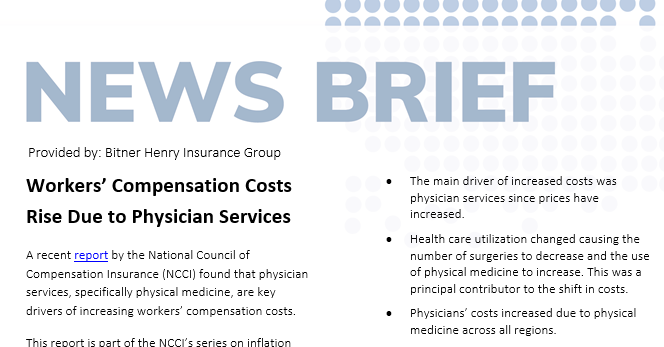
Rising workers’ compensation costs are increasingly driven by physician services, specifically the surge in physical medicine and therapy. While surgical and radiology costs have trended downward since 2012, payments for physical medicine have spiked across all regions. To manage these expenses, businesses must monitor healthcare utilization trends and ensure their policies account for the 15% increase in average annual physician payments.
What is Driving the Surge in Workers’ Compensation Medical Costs?
According to the National Council of Compensation Insurance (NCCI), physician services now account for 40% of all workers’ compensation medical spending. While overall medical inflation has remained relatively stable, the average payment for physician-led claims has grown by 15% since 2012. This shift is largely attributed to changes in how care is delivered, moving away from high-cost surgeries toward long-term recovery services.
Why is Physical Medicine Replacing Surgery as a Cost Leader?
Recent data shows a significant shift in healthcare utilization: the number of surgeries is decreasing, while the use of physical medicine (such as physical therapy and chiropractic care) is rising. This transition has made physical medicine the principal contributor to increased costs in every region of the U.S., as extended treatment plans for soft-tissue injuries often result in higher cumulative physician payments.
How Does Regional Variation Impact Physician Payments?
Physician payment growth is not uniform across the country. The NCCI found that average annual increases range from 1.3% to 1.8%, with the Midwest seeing the highest percentage of growth and the Northeast seeing the lowest. Despite these variations, the underlying trend remains the same: the price of services and the frequency of visits for physical medicine are the dominant factors in your premium calculations.
How Do Workers’ Comp Prices Compare to General Inflation?
Interestingly, the price of physician services paid by workers’ compensation grows at approximately 1.2% per year. While this rate is slower than the Consumer Price Index (CPI), it is faster than the Producer Price Index (PPI). This “middle-ground” growth suggests that while individual service prices aren’t skyrocketing, the increased utilization of these services is what ultimately inflates the total claim cost.
What Other Medical Services Influence Your Total Risk?
Beyond physical medicine, the NCCI monitors four other critical categories that dictate workers’ comp trends: evaluation and management, surgery, radiology, and prescription drugs. While surgery and radiology costs have actually decreased over the last decade, staying informed on these trends helps businesses work with their insurance providers to implement better return-to-work programs and cost-containment strategies.
Click for more resources on Workers’ Compensation.
If you are in need of insurance for your home, business, international organization, home health organization, recovery program, ministry, or non-profit, feel free to request a quote! We would love to assist you with your insurance needs.
Last Updated: March 26, 2026.
Further Reading

OSHA’s Most Frequently Cited Standards
Bitner Henry Insurance Group provides this free table of OSHA's most frequently cited standards. This guide covers: Descriptions of the most common...

Why Smaller Organizations Are Often More Vulnerable
There is a common misconception that safety is found in small numbers. Parents often feel more comfortable leaving their children in a small,...