
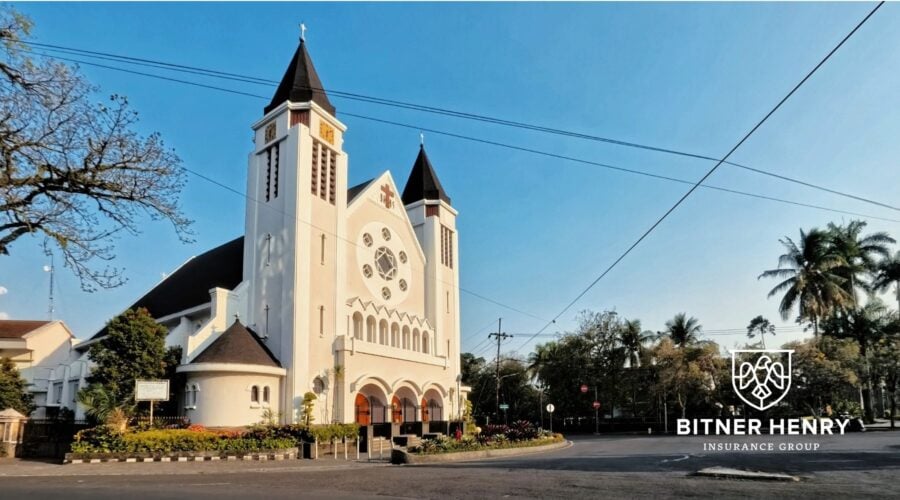
As a community-focused organization (church, school, or non-profit), sharing your building is an act of mission and goodwill. However, allowing an outside group to operate in or use your facility is a high-risk activity that instantly shifts liability onto your organization if not managed correctly.
To protect your insurance, your assets, and your mission, you must establish and strictly enforce formal Facility Use Guidelines.
1. The Core Liability Risk: Control and Premises Liability
When a third party uses your space, your organization faces two primary liabilities:
-
Vicarious Liability: If the guest group’s actions (e.g., a fight, a violation of safety rules) result in harm, your organization can be sued for allegedly failing to supervise or control the environment.
-
Premises Liability: You, as the property owner, are responsible for ensuring the building is safe and hazard-free. If a guest is injured due to a known building defect (e.g., loose stair rail, wet floor), your organization will be the primary defendant.
2. Mandatory Requirement: The Certificate of Insurance (COI)
This is the single most critical step in protecting your organization. A COI proves the guest organization has its own insurance to cover its activities.
-
Require a COI: Mandate that all external groups provide a current Certificate of Insurance. This COI must show adequate General Liability (GL) coverage (minimum of $1 million is standard).
-
Require “Additional Insured” Status: The COI must name your organization (the church/school/non-profit) as an “Additional Insured.” This is essential because it guarantees that the guest’s policy will act as the primary defense for your organization in the event of a lawsuit arising from their activities.
-
Waiver of Subrogation: Ideally, the COI should also include a waiver of subrogation, preventing the guest’s insurer from suing your organization’s insurer to recover costs.
3. Formalizing the Agreement: The Facility Use Contract
A handshake is not a contract. A formal, written agreement is necessary to legally define responsibilities and indemnify your organization.
-
Hold Harmless Clause: The contract must contain a Hold Harmless or Indemnification Clause. This is a legal agreement where the guest organization agrees to defend and pay for any claims or damages resulting from their use of your facility, relieving your organization of liability.
-
Defined Use and Time: Clearly specify the dates, times, and exact areas the group is permitted to use. The contract should state that access outside those parameters is unauthorized.
-
Rules of Conduct: Detail prohibitions against smoking, alcohol, hazardous activities, and anything that violates your organizational policies or mission.
4. Operational and Safety Management
Even with a contract, your team must manage the risk while the external group is present.
-
Walk-Through and Inspection: Have a staff member or volunteer conduct a brief walk-through with the guest’s representative before and after the event. Document any pre-existing damage and verify that the facility is left in a safe condition.
-
Security and Access: Never give permanent keys or codes to external groups. A designated staff member should be responsible for unlocking and securing the premises.
-
Equipment Use: Clearly state which organizational equipment (AV systems, kitchen appliances, ladders) the guest is permitted to use—and explicitly forbid the use of any equipment requiring specialized training (e.g., commercial kitchen equipment) unless a certified staff member is present.
5. High-Risk Exclusions
Certain types of rentals should be avoided entirely due to the extreme liability they introduce.
-
Avoid: Events involving pyrotechnics, bouncy houses or large inflatables (unless directly rented and insured by the vendor), and high-intensity, unsupervised sports leagues.
-
Insurance Consultation: If a request involves complex or high-risk activities, always consult your insurance agent first. They can confirm whether your current policy excludes the activity and whether special event coverage is required.
By adhering to these rigorous guidelines, your organization can continue its charitable work while effectively transferring and managing the inherent liability risks associated with lending your facility.
Is your church or other organization allowing another group to operate in or use your building? If so, you may want to read these Lending Facility Guidelines! Keep your organization and your insurance protected by knowing how to safely lend your facilities.
Lending Facility Guidelines (PDF)
Last Updated: March 25th, 2026
Further Reading

Excluded Drivers in Recovery Programs (Video)
This video is a podcast with insurance executive and recovery center advisor Chris Graham and focuses primarily on addiction treatment and recovery...

Are You Taking Precautions Against Sexual Abuse Claims?
When headlines of this nature occur at an unfortunate frequency, any organization working with youth must create a culture where sexual abuse is...